
WhatsApp SIM binding is the real story behind the viral claim that WhatsApp is leaving India. It isn't leaving. What's happening is a government rule that requires messaging apps using Indian mobile numbers to check that the SIM for your account is actually in your phone. App makers have until 31 December 2026 to comply, so the change is expected to bite from 1 January 2027.
The "quitting India" line isn't new either. It goes back to a 2024 court argument about encryption, not to anything WhatsApp has announced about SIM binding. Here's where the claim comes from, what the rule actually says, who it affects, and what to do now, including if you live outside India with an Indian number. Facts checked on 26 October 2026.
We only recommend what we'd use.
Last updated: 27 October 2026
The short answer: no, WhatsApp isn't leaving India
We found no announcement from WhatsApp or its owner, Meta, that it plans to stop serving India. The rule now in the news asks WhatsApp and other apps to change how they check your account. It doesn't ban any app, and nothing in the government's own statements says WhatsApp will switch off on 1 January.
Here's how the viral claims line up against the record, as of 26 October 2026:
| What the viral posts say | What the record shows |
|---|---|
| WhatsApp is quitting India | No current exit announcement. The line comes from WhatsApp's April 2024 encryption argument in the Delhi High Court. |
| WhatsApp stops working on 1 January | Apps must comply by 31 December 2026. Accounts are expected to keep working if the registered SIM is in the phone. |
| WhatsApp Web logs you out every 6 hours | The original 6-hour rule was dropped. Web logouts are now based on risk, with no fixed time period. |
| Some phone models will lose WhatsApp | NDTV says nothing so far suggests specific iPhone or Android models will stop working. |
Where the quitting India claim comes from
On 25 April 2024, WhatsApp was in the Delhi High Court challenging part of India's 2021 IT Rules. That rule, Rule 4(2), requires big messaging platforms to be able to identify the first sender of a message when a court or authority orders it. WhatsApp argued that it can't do that without breaking end-to-end encryption.
Its lawyer, Tejas Karia, told the court: "As a platform, we are saying, if we are told to break encryption, then WhatsApp goes," NDTV reported, citing Bar and Bench. Many outlets reported that as a threat to leave India, and The Hindu wrote that WhatsApp "will have to exit India" if forced to comply.
That was a court argument about encryption and tracing messages. It wasn't an announcement that WhatsApp was leaving, and it had nothing to do with SIM cards. The claim is being recycled now because SIM binding is in the news. It isn't the first time a national rule has changed how a big app works in one country: our explainer on Australia's Fortnite iPhone ruling is another example.
What WhatsApp SIM binding is
SIM binding means an app keeps checking that the SIM card linked to your account is inside the phone you're using. Banking and UPI payment apps in India already work this way.
The government's press release of 1 December 2025 says the Department of Telecommunications (DoT) issued directions on 28 November 2025 to apps that use Indian mobile numbers to identify users. It named WhatsApp, Telegram, Snapchat, Arattai, ShareChat, Josh, JioChat and Signal. The directions require these apps to stay "continuously linked to the SIM card" in the device, "making it impossible to use the app without that specific, active SIM."
Today, you verify your number once with a one-time code, and the app keeps working even if you take the SIM out. The DoT says criminals have misused that gap to run scams with Indian numbers from outside the country, including digital arrest and impersonation fraud.
What changes from 1 January 2027
The government's latest word is a written answer in Parliament. In a Rajya Sabha reply dated 2 April 2026, the Minister of State for Communications and Rural Development, Dr Pemmasani Chandra Sekhar, confirmed two things:
- The deadline: the compliance timeframe is "31.12.2026". The original directions gave apps 90 days, and NDTV reports the deadline was extended after representations from industry.
- Web logouts: WhatsApp Web and similar web versions must be logged out "on the basis of risk-based analysis. No specific time period has been stipulated for such logging out."
That second point matters, because the original directions said web sessions must be logged out at least every 6 hours. That fixed rule is gone. India Today reports it was replaced with risk-based logouts, including immediate logouts in suspected fraud cases.
In practice, from 1 January 2027 the SIM for your WhatsApp number will need to be in the phone running WhatsApp. India Today says it's unlikely accounts will stop working automatically on the deadline, and that the exact restrictions will depend on how each app implements the rule. India Today also says WhatsApp has reportedly begun beta-testing SIM binding on Android. We found no public statement from WhatsApp on how its version will work.
Who WhatsApp SIM binding affects most
If your WhatsApp number's SIM sits in the phone you use every day, you may notice very little. The people most likely to run into problems, based on reporting by India Today and NDTV, are:
- Two-phone users: people who keep the SIM in one phone and use WhatsApp on another.
- Wi-Fi-only devices: India Today's example is WhatsApp on a tablet while the SIM is in your phone. That setup may stop working.
- People who removed the SIM after setup, or who rely mostly on Wi-Fi and rarely use mobile data.
- Travellers and frequent SIM swappers: anyone who takes the Indian SIM out abroad and puts in a local one.
- Indians living abroad: including in South Africa, if you still use WhatsApp on an Indian number. The rule is about Indian mobile numbers, and we found nothing saying it changes anything for numbers from other countries.
Businesses that run WhatsApp through linked devices should watch this too. If you've set up an AI assistant using our guide to building your own AI chatbot for WhatsApp on an Indian number, check how that number's account will be verified once the rule starts.
What to do now
- Keep the registered SIM active. Don't let the number tied to your WhatsApp lapse. NDTV reports the app could suspend features if that SIM is removed, replaced or deactivated.
- Keep that SIM in the phone you use for WhatsApp. If you use a dual-SIM phone, make sure the WhatsApp number is one of the two.
- Consider an eSIM. NDTV says the rules are expected to cover eSIM profiles, so an eSIM for the same number should count. India Today notes the directions don't spell this out yet.
- When travelling, roam instead of swapping. The government's press release says the directions don't affect cases where the SIM is in the handset and you're roaming.
- Wait for the official update. Any change WhatsApp makes should arrive as a normal app update from your usual app store. There's nothing to install from a link.
Scam warning: ignore links that promise to save your account
Viral posts about an app shutting down are an easy hook for scammers. Be wary of any message that says you must click a link, fill in a form or share a code to keep your WhatsApp account, or to stop it being deleted. Nothing in the government's statements asks users to do that.
- Never share a WhatsApp verification code or one-time PIN with anyone.
- Don't install apps or files from links sent in chats.
- Check news like this against official sources, such as the government's own press releases, rather than forwarded messages.
- Keep your phone and browser updated; our post on the Chrome 155 security fixes shows why updates matter.
WhatsApp SIM binding FAQ
Does WhatsApp Web stop working?
No. Web sessions will need to be logged out on a risk basis, so you may have to scan the QR code again more often, but the government says no fixed time period has been set. The 6-hour rule from the original directions no longer applies.
Will Telegram be affected too?
Yes. Telegram was named in the original directions alongside WhatsApp, Snapchat, Arattai, ShareChat, Josh, JioChat and Signal. NDTV reports that Snapchat is unlikely to be covered and that Signal's status is unclear, so treat the final list as unconfirmed.
Will WhatsApp stop working on some phones on 1 January?
Nothing we found says so. NDTV reports the rule is about SIM checks, not phone brands or operating systems.
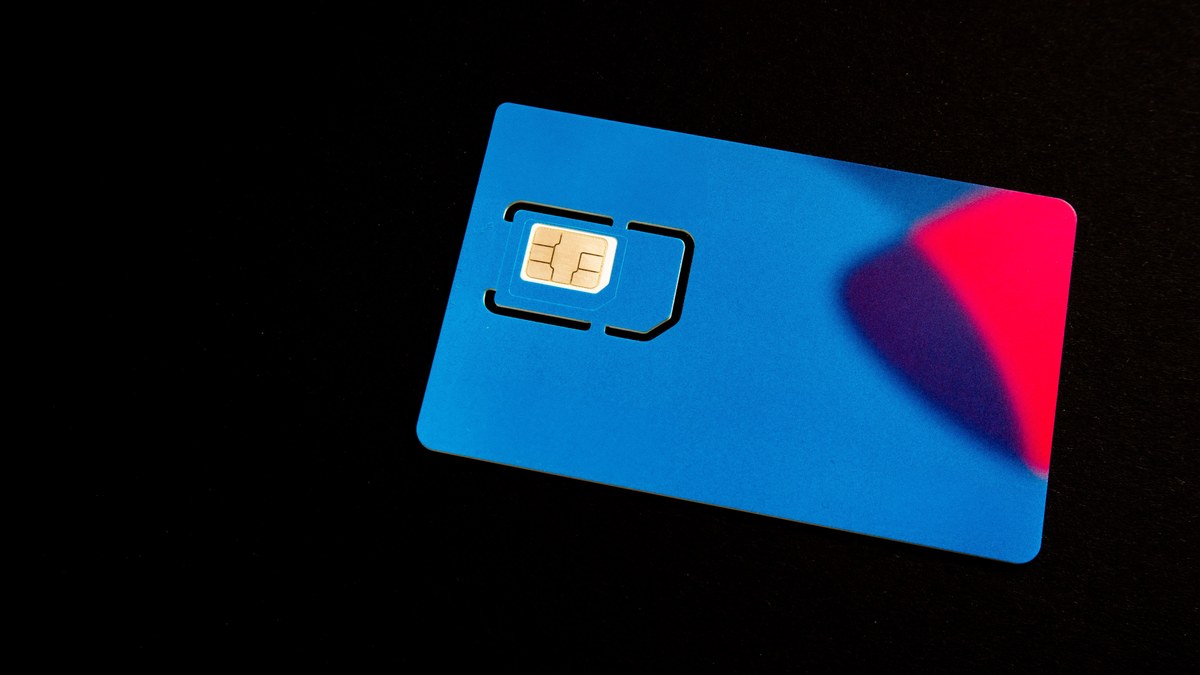
Featured photo: A SIM card on a black background. Under India's SIM binding rule, the SIM for your WhatsApp number has to be in the phone you use. Photo: Pascal / Pexels
Sources: Government of India, Department of Telecommunications: Rajya Sabha Unstarred Question 4331, answered 2 Apr 2026 (hosted by MediaNama), checked 26 Oct 2026; Press Information Bureau: DoT SIM-binding directions, 1 Dec 2025, checked 26 Oct 2026; India Today: SIM binding starts January 1, 23 Oct 2026, checked 26 Oct 2026; NDTV: What changes from January 1, 2027, checked 26 Oct 2026; NDTV: WhatsApp in the Delhi High Court, April 2024, checked 26 Oct 2026; The Hindu: WhatsApp vs Government and the traceability debate, April 2024, checked 26 Oct 2026.