
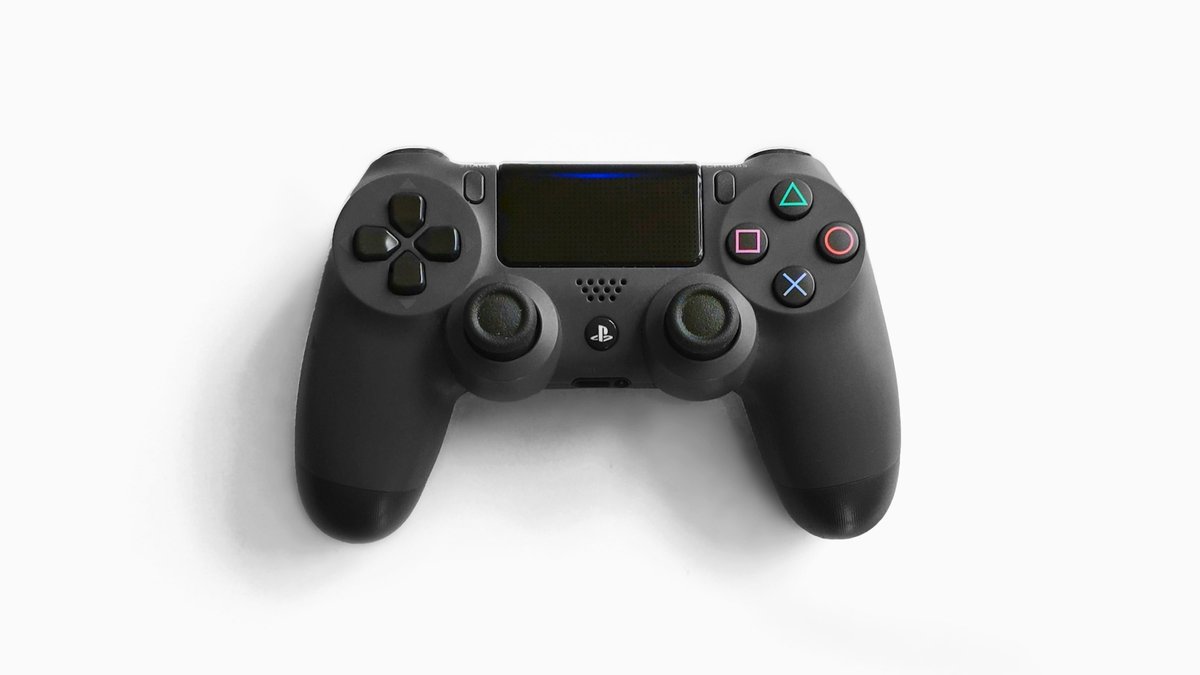
If you own a standard PS5, Sony just handed you a piece of PS5 Pro tech. On 1 Oct 2026 it announced Quick Spectral Super Resolution (QSSR), an AI upscaler built to run on the base console. There's a catch worth knowing up front. QSSR isn't a system-wide switch. It's a per-game graphics option, and right now only two games have it: Marvel's Wolverine and Ghost of Yōtei.
So the real questions are simple. Should you turn it on in those two games? And does it change whether a PS5 Pro is still worth buying?
Short version. Keep it on in Wolverine if you play in a 60fps mode. Insomniac's latest patch turns it on by default. Try both settings in Ghost of Yōtei, because the gains there are smaller. Switch it off if you chase the highest frame rate in uncapped modes. And only buy a Pro if you want the best image quality today, because Sony itself says the Pro's version is still the better one.
Affiliate disclosure: some product or store links may later be affiliate or referral links. Facts in this post come from Sony's PlayStation Blog and Digital Foundry's hands-on testing, with TechRadar's report as a second source, checked on 8 Oct 2026 (SAST). Sony says more games will add QSSR, so check your own game's settings after each update.
What Sony announced on 1 Oct
The announcement came from Daniel Craig, a Principal Engineer in graphics R&D at Sony Interactive Entertainment, on the PlayStation Blog. In Sony's words: "Today, we're excited to announce Quick Spectral Super Resolution (QSSR): a new performance tier of AI upscaling."
It grew out of Project Amethyst, Sony's AI graphics collaboration with AMD. Sony credits two things for making it possible: "a streamlined neural network architecture" and "a hand-tuned implementation that maximizes performance on PS5."
Both launch games were "being patched today to offer QSSR as an additional graphics option on PS5." That's the whole delivery method. You don't get it from a console firmware update. You get it when a game's developer adds it and you install that game's patch.
That point matters because the PS5 system update that also landed on 1 Oct (version 26.06-14.10.00) lists only security fixes and "performance and stability" improvements, according to PlayStation LifeStyle. Its notes don't mention QSSR at all.
How QSSR differs from PSSR on the PS5 Pro
AI upscaling sounds fancy, but the idea is easy. The game renders each frame at a lower resolution, which is cheaper for the hardware. Then a trained model fills in detail to produce a sharper, steadier image at the output resolution. If you've read about phones running AI on the chip in your pocket, it's the same family of idea. Our explainer on on-device AI in Dimensity 9600 Pro phones covers that side.
The PS5 Pro already has its own version, PSSR (PlayStation Spectral Super Resolution). Sony says PSSR "analyzes game images pixel by pixel and uses AI to upscale them," and that until now "its computational demands made bringing that experience to PS5 impossible."
QSSR is the lighter cousin. Sony is careful with the wording, and so should we be: "While PSSR remains the gold standard on PS5 Pro, QSSR provides some notable improvements to both image detail and image stability on PS5."
Read that twice if you're weighing a Pro. Sony isn't saying the base PS5 now matches it. It's saying the base PS5 got noticeably better in games that support QSSR.
The two studios involved are, unsurprisingly, upbeat. Insomniac's Head of Technology, Mike Fitzgerald, says QSSR "brings a great taste of the PS5 Pro experience to our players on PS5." Sucker Punch's Lead Rendering Engineer, Jasmin Patry, describes "a level of temporal stability that hasn't been possible on the PS5 console until now."
Which games have it today
Two, as of 8 Oct 2026:
- Marvel's Wolverine
- Ghost of Yōtei
To get it, update the game. In Marvel's Wolverine, Insomniac's notes for update 1.002.000 say the game “uses QSSR on PS5, on by default,” so it's already on once you've patched. In Ghost of Yōtei, look in the game's graphics settings for the new option. Sony only calls it "an additional graphics option," and we haven't confirmed the exact menu name in either game, so we won't guess at one here.
Sony says QSSR "will be offered broadly to all PlayStation developers." It hasn't published a list of upcoming games or any dates. If a forum post tells you the next ten titles, it didn't get them from Sony's announcement.
What Digital Foundry found
The most useful independent look so far comes from Digital Foundry, which spent around six hours hands-on with both games. The findings below come straight from Digital Foundry's own hands-on article of 1 Oct 2026. Where we quote Richard Leadbetter's video commentary, that comes via TechRadar's 2 Oct report, our second source.
Here's what Digital Foundry found:
- Wolverine looks much better. "In Marvel's Wolverine especially, the quality boost can be exceptional," Digital Foundry wrote. It described better temporal stability, more detail and fewer artefacts on things like moving foliage.
- Ghost of Yōtei improves less. Digital Foundry said a game "with already decent image quality saw less dramatic improvements."
- There is a cost. In an uncapped Wolverine test, Digital Foundry measured QSSR as slower than the game's existing upscaler "to the tune of around 1.5ms to 1.8ms," which "amounts to an 8-10fps difference."
- In 60fps modes, it's close to free. With dynamic resolution holding 60fps, Digital Foundry says QSSR "delivers similar performance with much improved image quality." The game drops its internal resolution a little, and the better upscaler more than makes up for it. In DF's video, quoted by TechRadar, Leadbetter put it as "performance is practically identical."
Digital Foundry also found the cost grows when the game outputs at 4K, and concluded that "upscaling to 1440p is the more natural target for QSSR." In plain terms, the trade-off depends on which mode you play in.
Turn it on, leave it off, or buy a Pro?
Here's how we'd decide, based only on what Sony and Digital Foundry have said so far. This is a plain chooser you can follow on the couch.
| Your situation | QSSR setting | Buy a PS5 Pro? | Why |
|---|---|---|---|
| Base PS5, Wolverine in a 60fps mode | Keep it on (on by default after the update) | Not for this game | Digital Foundry found similar performance with much improved image quality |
| Base PS5, Ghost of Yōtei | Try both | Not for this game | Digital Foundry saw smaller gains; judge it on your own TV |
| Base PS5, uncapped or high-frame-rate modes | Switch it off if fps matters most | Only if you want both sharpness and fps | Digital Foundry measured an 8-10fps difference in uncapped Wolverine |
| You want the best image quality now | Not relevant on Pro | Consider it, after checking local price and stock | Sony says PSSR on Pro "remains the gold standard" |
| You wanted a Pro mainly for sharper visuals on a mid-size TV | Turn it on where offered | Wait and see | More games are coming, but Sony hasn't named them |
| You're waiting on one specific game | Check after its patch | Don't buy on a guess | Sony hasn't said which games are next |
A word on price. We're deliberately not quoting one for the PS5 Pro. The reports we checked don't agree on what it costs right now, and we couldn't confirm a current price or local stock on an official Sony page. Check the current price at your retailer before you decide. The same logic applies to any "Pro" upgrade, whether it's a console or a phone. Our iPhone 17 vs 17 Pro guide walks through that "do I really need the Pro chip?" question for Apple. If you're open to PC gaming instead, our Steam Deck OLED vs ROG Ally comparison is a different route to the same goal.
What we don't know yet
A lot, honestly. Here's the list so you can spot overconfident takes:
- Which games get QSSR next, and when. Sony gives no list.
- The exact menu name in each game.
- Older games. Sony hasn't said whether QSSR could ever reach a game without a developer patch.
- PS VR2, Remote Play and PS Portal. No word on whether QSSR applies there.
- Native resolution figures per mode. Digital Foundry shows these in its video, but we haven't verified them, so we're leaving them out.
The Joburg reality check
QSSR is a game patch, and nothing in Sony's announcement limits it by region. A base PS5 in Johannesburg should see the same option once Wolverine or Ghost of Yōtei updates. We haven't tested it on a South African console yet, so take that as a reading of Sony's post, not a hands-on result.
One practical tip. If you're on capped mobile data, let the patches download over fibre or another uncapped line when you're not using the console. Then flip the setting, play for ten minutes each way, and trust your own eyes over anyone's screenshots.
FAQ
Is QSSR free?
It arrives as a game patch, and Sony's announcement doesn't mention any charge. You need to own the game and install its update.
Does it work in every PS5 game?
No. Only Marvel's Wolverine and Ghost of Yōtei have it so far. Other games need their developers to add it.
Is it as good as the PS5 Pro?
Sony says PSSR on the PS5 Pro "remains the gold standard." QSSR brings "notable improvements" to the base PS5, not parity.
Featured photo: Michal Ilenda / Unsplash
Sources: AI upscaling is coming to PS5 (PlayStation Blog, Sony, 1 Oct 2026), Marvel's Wolverine Update 1.002.000 (Insomniac Games Support), Hands-On With QSSR: AI-Driven Upscaling for the Standard PS5 (Digital Foundry, 1 Oct 2026), Sony has revealed its new QSSR upscaling tech for the base PS5 (TechRadar, 2 Oct 2026, reporting Digital Foundry's analysis), PS5 system update rolled out to ring in October 2026 (PlayStation LifeStyle via Yahoo Tech, 2 Oct 2026). Facts checked 8 Oct 2026 (SAST).