
Edge0 released Edge0-145B on 12 November 2026, a 145 billion parameter mixture-of-experts model. The title says "one GPU", and Edge0 does say it runs on one NVIDIA GPU, but the model does not fit inside that GPU's memory. On Edge0's reference card, an RTX 5090 D with 24 GB, the Q3_K build holds 40.81 GiB of weights by using 23.14 GiB of VRAM plus 31.28 GiB of system RAM. It also needs NVIDIA CUDA 13 on Linux or Windows. Edge0's docs also list Apple Silicon for the Q3_K build only, but its model page says the Apple M2 Ultra results do not imply a macOS build is available now. Edge0's GitHub doc puts the minimum at 16 GiB of GPU memory plus 20 GiB of system RAM.
"Open" needs care too. The weights are downloadable, but they are not under a standard open-source licence. Edge0 uses its own Edge0 Community Model License 1.0, and the base model carries the Qwen Community License 1.0. Call it open-weights, source-available with commercial limits. It is free for personal, research and most internal use, but three commercial cases need Edge0's written permission, covered in the licence section below. This is not legal advice.
We only recommend what we'd use.
Last updated: 19 November 2026
The short answer on Edge0-145B
Edge0's model page lists 145 billion total parameters, 10.12 billion active per token and a 256K context window. It says the model was trained natively in 4-bit and ships in two builds, Q3_K and NVFP4. Edge0's launch blog calls it open-source. Edge0's own docs say: "The 145B / 120B models are not Apache-2.0."
What one GPU really needs
Here is the hardware checklist, with each statement attributed.
| Item | Edge0's statement | Source |
|---|---|---|
| GPU and software | NVIDIA GPU with CUDA 13 on Linux or Windows. Apple Silicon with Metal for Q3_K only. NVFP4 is CUDA-only. Not iOS or Android. | Edge0 docs, NVFP4 card |
| Stated minimum | "at least 16 GiB of GPU memory and 20 GiB of system memory" | GitHub doc |
| Reference setup | RTX 5090 D 24 GB. Q3_K: 23.14 GiB VRAM plus 31.28 GiB RAM. NVFP4: 23.25 GiB VRAM plus 38.27 GiB RAM. | Edge0 model page |
The sources disagree on the floor. The Hugging Face card says its 16 GiB VRAM plus 20 GiB RAM row is a test budget on an RTX 5090 D with caps applied, "not minimum system requirements". So 24 GB of VRAM plus 32 to 40 GB of RAM is the practical reference, not the floor.
Edge0's blog also describes a vocabulary table of about 48 GB read from SSD on demand, so check your free disk space against the weights size, 40.81 GiB for Q3_K and 47.79 GiB for NVFP4. Edge0 gives no single free-space figure beyond those sizes. A low-RAM mode, --mmap-experts, reads uncached experts from SSD on demand at a speed cost, per the Hugging Face usage notes. AMD and Intel GPUs are not listed for this model, and we cannot say whether it works on them.
Which build to pick: Q3_K or NVFP4
Q3_K is 40.81 GiB of weights, runs on CUDA and Metal, and is the build Edge0 tested at 16 GiB of VRAM plus 20 GiB of RAM. NVFP4 is 47.79 GiB and CUDA-only. On the same RTX 5090 D, Edge0 reports 98.3 tokens per second for NVFP4 and 121.2 for Q3_K in agentic decode. Edge0 published no quality comparison between them beyond its benchmark table, so we make no claim about quality differences.
The licence in plain English
Edge0 Community Model License 1.0 is dated 12 November 2026 and ships as the LICENSE file in the Hugging Face repos, which list license: other. Read the raw licence text yourself. Per that text, with no fee, registration or user or revenue threshold, you may do the following unless it is a "Commercial Model Offering":
- use it personally, for research and for teaching;
- share original or modified models with the community;
- use it inside an organisation, including a business;
- use it as an employee or freelancer to produce paid work, without giving customers access to the model;
- use its outputs commercially.
You may modify, fine-tune, quantise and redistribute, with conditions: include the licence and upstream texts, keep notices, record your changes and tell recipients which licence governs what.
Three cases need a separate written commercial licence from Edge0 under Section 4: (a) selling, renting or licensing access to the model or its weights; (b) running a commercial model service for third parties, such as an API or hosted endpoint, financed by fees, subscriptions, advertising or sponsorship; (c) offering an independent commercial coding or office-productivity assistant that uses the model, including when it runs on the user's device. Single-purpose tools and incidental assistant features are carved out. The licence gives info@edge0.ai as the contact.
Edge0's permission is not Qwen's permission. The Qwen Community License 1.0 copy in the repo says products with more than 100,000,000 monthly active users or US$20,000,000 in monthly revenue must prominently display the model name. It also says a licensee running a Model as a Service or AI Work Assistant business needs a separate licence from Qwen. Edge0's release-scope.json says the licence covers only "Edge0-specific model contributions" and is "not evidence of a separate Qwen commercial authorization". It also records that the training base revision was not verified. We found nothing showing that Qwen has approved commercial use, so do not assume it. Edge0's framework code, including edge0-infer, is Apache-2.0 and the edge0-strata engine is MIT, both separate from the model licence. For another weights licence, see Kimi K3.1 Pro's free weights and licence. If your use is borderline, ask Edge0 and Qwen.
How it runs
Edge0's runtime is edge0-infer, which starts the edge0-strata engine. Per the GitHub guide, you build it from source from the repository, so follow that Getting started guide rather than commands copied from elsewhere. The Hugging Face card says the server exposes an OpenAI-compatible local endpoint, with the model alias edge0_145b on localhost port 8000. For a simpler way to run a smaller model, see how to run a private AI model on your own PC with llama.cpp.
Speed: what Edge0 reports and what one user reported
These are Edge0's own measurements of Q3_K agentic decode, from its model page:
- RTX 5090 D: 121.2 tokens per second.
- RTX 4090 24 GB: 91.7.
- Apple M2 Ultra: 57.0 on Metal. Edge0 says this does not imply a macOS build is currently available.
- Under the 16 GiB VRAM plus 20 GiB RAM cap: 44.9.
One user, in GitHub issue 208 on 13 November 2026, reported lower numbers on an RTX 4090 with 64 GB of RAM on Windows: 61.3 tokens per second in chat and 75.3 for the agent. They said one configuration needed more than 64 GB of RAM at 64K context, so they used --mmap-experts at a prefill cost. That is one report, and we have not verified it. Benchmark scores on Edge0's pages, such as 86.5 on Terminal-Bench 2.1, come from Edge0's own table, and we found no independent check. Any claim that it rivals frontier cloud models is Edge0's own, drawn from that table.
Who should try it and who should skip it
Try it if you are a developer with a 24 GB NVIDIA card and 32 GB or more of RAM who wants a local coding agent.
Skip it if you have a laptop GPU with less than 16 GiB, AMD or Intel graphics (Edge0's docs list CUDA 13 for this model) or a phone. Also skip it if you plan a paid hosted service or paid coding assistant built on it without reading Section 4 of the licence. For a much smaller model, see a small model that runs on a 4GB laptop GPU. Next step: read the LICENSE file before you download anything.
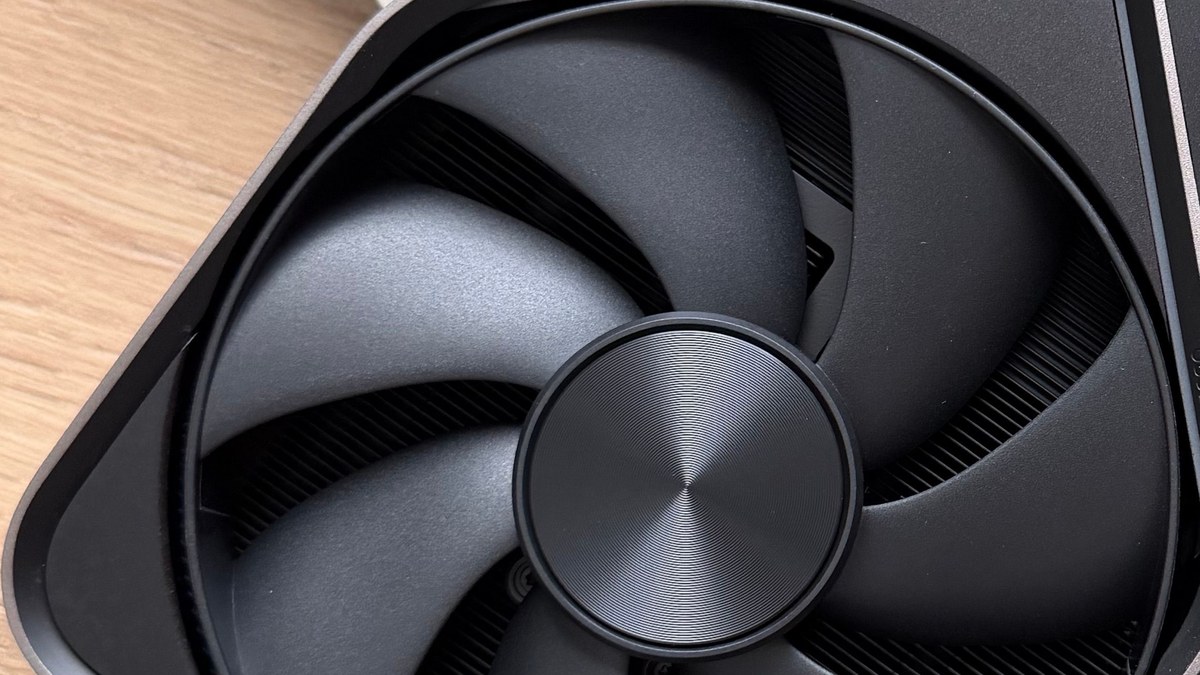
Featured photo: Edge0 says Edge0-145B runs on one NVIDIA GPU, with part of the model held in system RAM. Photo illustrative, not Edge0 hardware. Image: Natalia S / Pexels
Sources: Hugging Face, Edge0-145B-q3k; Hugging Face, Edge0-145B-NVFP4; Edge0 Community Model License 1.0; Qwen Community License 1.0; Edge0 model page; Edge0 blog; Edge0 docs, device requirements; Edge0 docs, licence and model terms; GitHub, edge0-145b guide; GitHub issue 208.